

One of the largest mining farms is located in Russia, in a data center called BitRiver, in the city of Bratsk in the Irkutsk region. There are more than 25,000 mining devices here, and there is a reserve to increase their number to 67,000.
The price of electricity for BitRiver is about three cents per kWh.
Due to the energy-intensive nature of industrial crypto mining, data centers are often located in areas with available electricity and, ideally, low temperatures so that the ASIC chips do not overheat. Cool places in Siberia with a hydroelectric power station are well suited.
The northern city of Bratsk in Russia is ideal for cryptocurrency mining because electricity is cheap and winters are long. Mining farms in warmer climates require additional costs for fans and cooling equipment, which can significantly increase costs.
Bratsk is considered the most important energy center of Russia. The city arose during the development of Siberia in 1955.
Currently, the city is the largest industrial center in the country and the second most populous in the Irkutsk region with more than 230,000 residents. The plant’s structures form one of the largest reservoirs in the world. The Bratsk hydroelectric power station is the third largest and the first hydroelectric power station in Russia. The power station generates a huge amount of electricity, so its cost in this area is very low, making it an ideal place for a cryptocurrency farm. The largest data center in the CIS.
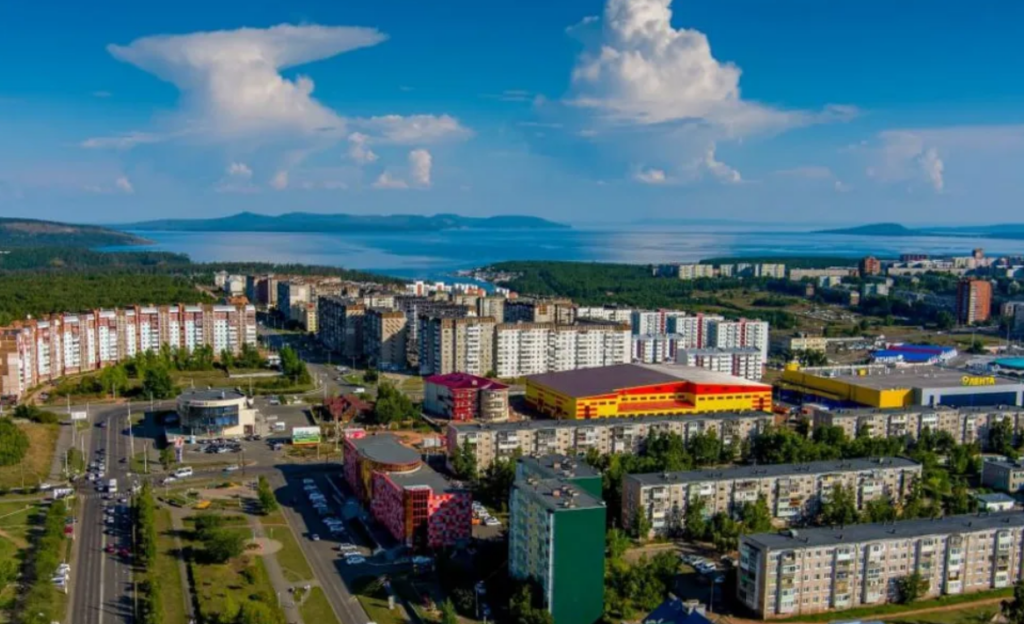
The cryptocurrency market in Russia has not yet fully formed due to the delay in drawing up the regulatory framework for mining, but despite this, large data centers are appearing in the country that can generate BTC on an industrial scale.
BitRiver organized a mining farm near the Bratsk hydroelectric power station and pays the owners of the En + Group company directly for electricity. Up to 100 MW is supplied here. The power station sells any excess power to the mining farm, providing additional profit, while the farm itself profits from lower tariffs.
The Bratsk data center is the largest crypto mining project in the country, which is worth tens of millions of dollars. In general, the appearance of a large data center in Bratsk is positive for the city. The emergence of new jobs and special training courses on cryptocurrency and blockchain will significantly improve the quality of life of citizens. A new discipline on blockchain technology has appeared at Bratsk University for students who dream of working in the field of information technology. The data center belongs to representatives of the billionaire – Oleg Deripaska.
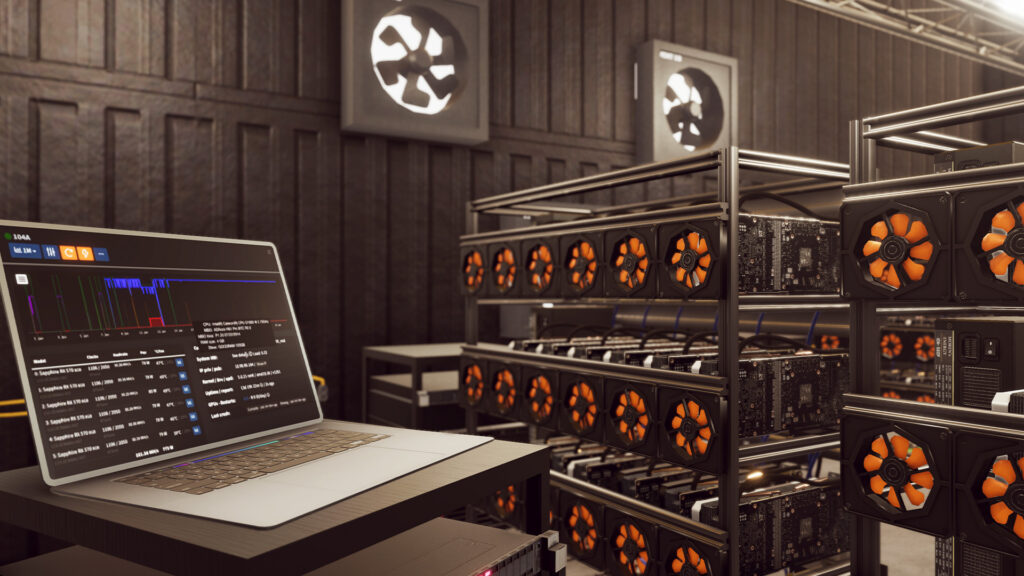
Another of Russia’s largest crypto farms is located in the Leningrad Region. More than 3,000 units of mining equipment are installed at this facility, which occupies an area of about 4,000 square meters. The mining center consumes about 20 MW of electricity. The investment in the creation of the farm amounted to 500,000,000 rubles (approximately ~ $ 6.8 million).
The Cryptouniverse company built this farm on the site of a former Soviet fertilizer laboratory, the premises of which were idle for rent for 20 years.
How much is the electricity bill for this farm?
The company pays more than 6,500,000 rubles ($ 88,500) per month at 2021 prices. Now you will understand why every time Bitcoin drops in price, the owner of this “farm” worries a little more than home miners. Plans to create mining farms based on the nuclear power plant in Sosnovy Bor still exist. The farm is located in the city of Sosnovy Bor, 40 km west of St. Petersburg on the shore of the Gulf of Finland. This nuclear power plant uses four RBMK-1000 power units with a capacity of 1000 MW each.

Farm in Divnogorsk, Krasnoyarsk Krai, another large cryptocurrency mining farm has been created in the Krasnoyarsk Krai, located in Siberia. According to the CEO of BitBaza, a cryptocurrency mining company, this mining farm is one of the largest in Russia.
The company chose this region due to low rental costs and energy saving opportunities.
Infrastructure costs are about 3 billion rubles or about $ 48 million.
The CEO of BitBaza noted that in the Krasnoyarsk region, where the cryptocurrency mining farm is located, there is a significant surplus of electricity, which leads to savings on its costs.
The mining farm is located inside the large industrial park “Divny”. The electricity consumption at the factory will start at 10 MW and increase to 120 MW as the farm grows and begins to require more electricity.
This farm is currently expected to generate an income of more than five hundred bitcoins per month. As a result, Bitcoin mining companies across Russia now have a combined capacity of over 600 megawatts, accounting for nearly 7 percent of the world’s total BTC electricity consumption.
For comparison, according to a recent report by Coinshares, farms in China, which are considered the world leader, account for about 65 percent of all network capacity.
Experts from “Geoburo” believe that after the implementation of the new law on mining in Russia, link HERE, energy capacity can be increased at least threefold and reach 20% of the total volume of mining in the world.
Coingecko calculated that one miner needs an average of 266,000 kWh of electricity to mine one Bitcoin (BTC). This process will take about seven years, requiring a monthly electricity consumption of about 143 kWh. Mining one Bitcoin in Russia cost $14.9 thousand in 2022 – that is how much the electricity required for this is. Now, due to the devaluation of the ruble, and a decrease in the rent of premises has decreased by 10%, all this gives very good prospects for generating income from mining in Russia.
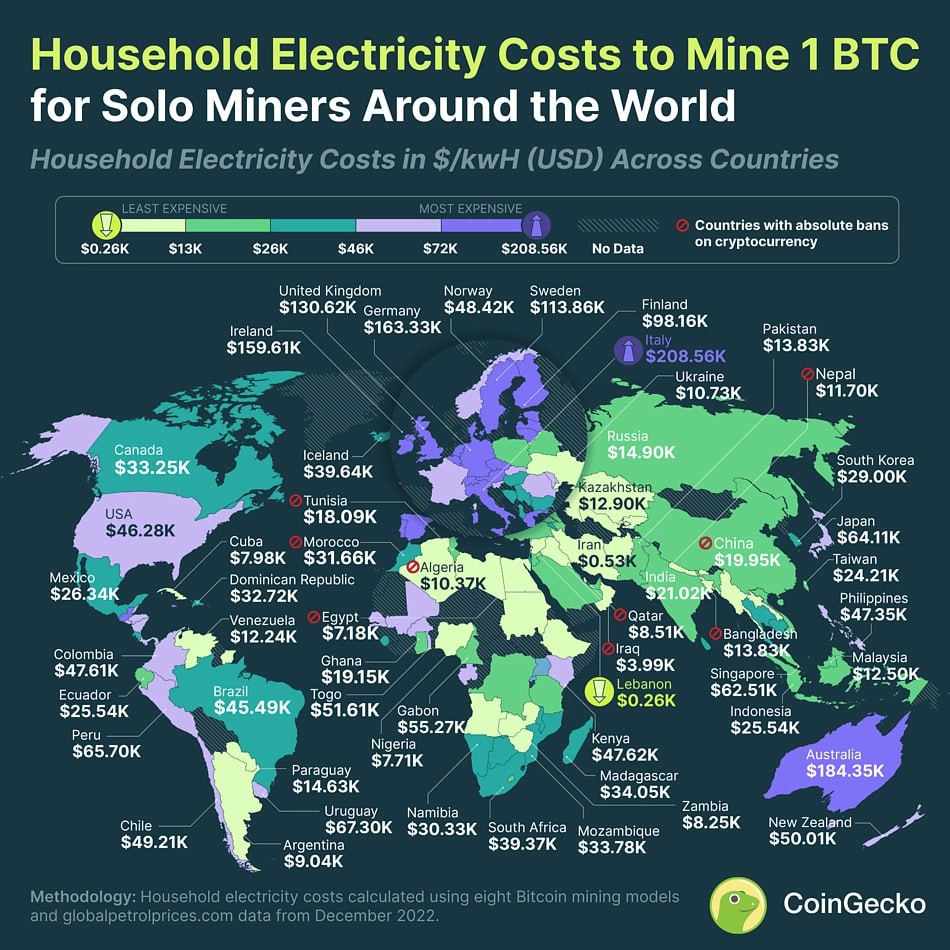
Even before the spring halving of 2024, BitRiver CEO Igor Runets predicted that by mid-2024 the cost of mining one bitcoin in the Russian Federation would rise from 15,000 to 24,000 USD. While in the US, according to the same expert, the figure will grow from 23,000 to 37,000 USD. Runets explained the difference in cost by the cheapness of electricity in Russia, as well as a colder climate that simplifies the installation of industrial mining farms.
A recent study by JPMorgan Chase, cited by the Binance news feed, shows that the current hash rate and energy consumption of the Bitcoin network point to more like 45,000 USD per bitcoin. Some English experts immediately after the halving even scared American investors with a cost of 53,000 USD. True, they did this based on data from the last quarter of 2023, that is, even before the “April events”, which means that they can hardly be trusted unconditionally.
Since electricity is the most expensive resource in the mining process, it means that optimizing its costs will primarily help increase profits. The easiest way is to locate your farm where kW is the cheapest, but countries with ultra-cheap energy resources often cannot boast of an attractive investment climate. The solution is to use renewable energy sources. The leader in this before the official ban in 2021 were Chinese miners, using about 30% of renewable energy in bitcoin mining, in second place is the United States with their 22.5%, in third place is Kazakhstan with 11.5%. These three countries together mined over 70% of all bitcoins in the world a few years ago, so the impressive 43% of renewable energy used for mining in Germany is just impressive, but does not play any global role.
The second way for miners to optimize costs is to receive a commission for transactions in the Bitcoin network. This is a fee to the miner for including a transaction in the next block that he processes. Transactions with a higher commission are processed by miners faster, as they bring more income.
The size of the commission fluctuates all the time, averaging hundred-thousandths of a bitcoin for processing a kilobyte of information (for example, at the time of writing, according to one of the portals, it fluctuated within 0.0000410 BTC / KB). Initially, this type of additional income was not very interesting to miners, but after the spring halving, some circumstances forced them to reconsider their point of view. CoinDesk experts note that Bitcoin miners have earned abnormal transaction fees thanks to the issuance of new meme tokens after the launch of the Runes protocol. Experts expect that in the near future, up to 15% of miners’ income will come from transaction fees. With a block reward of 3.125 BTC, miners have increased their income to an average of 19 BTC per block using transaction fees. “This is due to speculative activity by retailers in issuing new tokens (mostly meme tokens),” analysts Gautam Chhugani and Mahika Sapra write. “Investors should not extrapolate these fees into the future, but they do indicate the level of developer interest in the Bitcoin blockchain and the potential for fee income for miners,” the authors write for those miners who have already climbed into the catalog of royal yachts to choose a Christmas present.
Taxation in most countries does not distinguish between miners and other “cryptans”. Moreover, where crypto is permitted, the legislation is trying hard to put it on a par with other entrepreneurial or investment activities.
Individuals in Russia who sell cryptocurrency must pay standard personal income tax (13%-22% depending on the amount of income). Legal entities – standard income tax (20%).
In the United States, a little over a year ago, they abandoned the idea of imposing an additional 30% tax on miners for using the country’s energy system. Thus, industrial miners, as in Russia, remained in the same tax grid with other entrepreneurs.
The situation in China is paradoxical: mining is prohibited in this country, but at the same time, income from mining (apparently received before the ban in September 2021) is taxed at 20%. Citizens and tax residents of China are also prohibited from investing in mining and any other business related to cryptocurrencies.
Monaco and the UAE have completely exempted crypto enthusiasts from taxes. However, this has not made these places even remotely attractive for mining farms. In Singapore, citizens do not pay taxes on crypto if they hold it as an investment instrument.
In Portugal, cryptocurrency trading and transactions are completely exempt from taxes. Companies accepting payments in crypto must simply pay VAT and income tax.
Thus, it becomes clear that the world as a whole is steadily moving towards recognizing digital currencies, and therefore allowing mining as a way to obtain these currencies. If Donald Trump comes to the White House as a result of the US elections, and he at least partially keeps his campaign promise to keep half of the US reserve fund in bitcoins, this will probably lead to another surge in mining activity permits.
Despite the spring halving, today’s Bitcoin rate still allows you to earn money on mining even with the most pessimistic cost figures. The marginal profit from mining one Bitcoin is from 20 to 50% depending on the rate, location and expert assessment.
Miners will still strive to optimize their costs, using both existing additional sources of income such as transaction fees and new methods such as speculation on these fees.
The article was prepared by experts of the “Geoburo” company under the leadership of Andrey Kichaev. November 18, 2024.